Loading...
Serving Royal Palm Beach, FL and surrounding areas. (728) 529-5072
South Florida's water table is not something you can ignore - we test every slab for moisture before recommending a finish, so your floor holds up long after installation day.
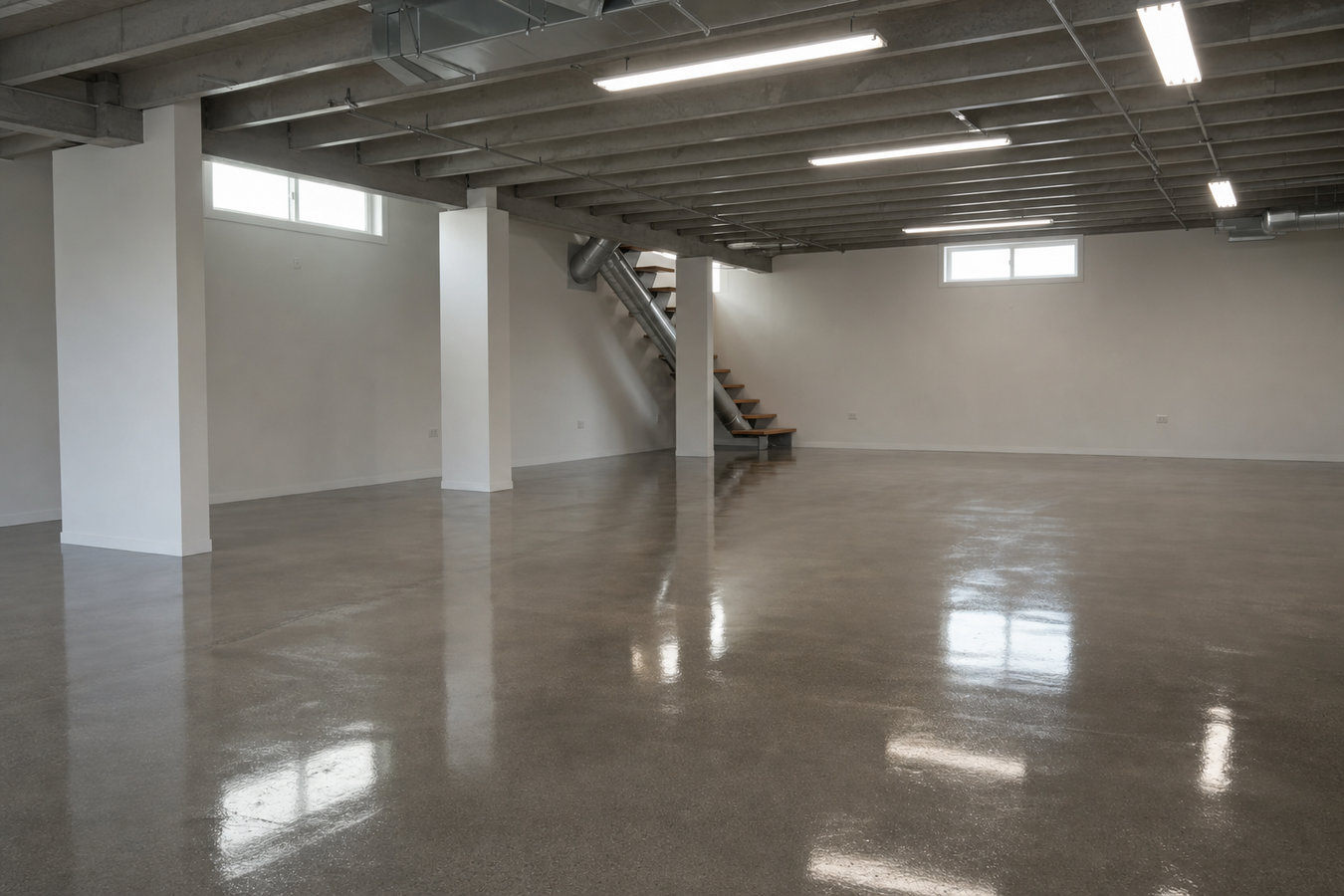
Basement flooring in Royal Palm Beach starts with a concrete slab assessment, covers options from direct coatings to floating tile systems, and most projects run one to three days from first prep cut to walkthrough. What makes the process different here is not the installation itself - it is the moisture. Palm Beach County sits on one of the shallowest groundwater systems in the country, which means any floor at or near ground level is dealing with pressure from below whether you can see it or not.
Most Royal Palm Beach homeowners come to basement flooring for one of two reasons: the existing floor is peeling, bubbling, or showing moisture damage, or they want to turn an unused lower-level space into something actually livable. In either case, the approach starts the same way - with a slab evaluation that goes deeper than a visual inspection. The South Florida Water Management District documents just how close the water table runs in Palm Beach County - the concrete under your feet is in constant contact with that groundwater system.
Choosing the right finish matters, but choosing a contractor who understands this climate matters more. If your project involves surface prep first, concrete grinding and surface preparation is where every successful below-grade floor begins.
Those white deposits are a sign that water is moving up through the concrete and leaving minerals behind as it evaporates - very common in Royal Palm Beach given the shallow water table. On its own it is not dangerous, but it tells you the slab is actively dealing with moisture. Any floor installed over it without addressing that first will eventually bubble, peel, or grow mold.
In South Florida's climate, a musty smell in a lower-level or enclosed space after a stretch of dry weather usually means moisture is coming from below rather than from a roof or pipe leak. That is exactly the condition a contractor needs to evaluate and test for before recommending any finish - the source determines the fix.
Coating or tile that is lifting, bubbling, or peeling away from the slab is a sign the original installation did not account for moisture properly, or the surface was not prepped well enough to begin with. Patching it will not fix the underlying problem. Doing the job correctly once - with moisture testing and proper prep - lasts far longer than repeated repairs.
Hairline cracks in concrete are common in homes built on South Florida's sandy soil. Small surface cracks are usually not a structural concern, but they need to be filled before any new floor goes down. Left unaddressed, they will telegraph through coatings and tile and create weak points where moisture can enter.
We offer three main approaches for below-grade and enclosed lower-level spaces, and the right one depends on how you plan to use the room, what condition the slab is in, and what your budget allows. Direct coatings - epoxy or polyaspartic applied straight to the prepped concrete - seal the slab from below-grade moisture and give you a finished, cleanable surface without raising the floor height. This suits utility areas, storage rooms, and garage-adjacent spaces that see occasional traffic. For spaces being converted into living areas, a floating tile or rigid core system over a moisture-barrier layer gives you a warmer feel underfoot while still accounting for South Florida's humidity. We also work with self-leveling underlayment for slabs that are uneven - that material is covered in detail on our concrete grinding and surface preparation page.
Every project begins with surface preparation - grinding any high spots, filling cracks, cleaning the slab, and applying a moisture barrier if testing shows it is needed. This step takes longer than people expect, but it is the difference between a floor that lasts and one that fails in two years. After installation, we apply a topcoat or sealer rated for South Florida's humidity and walk through the finished space with you before closing out the job. For slabs that need protective treatment without a full coating, concrete sealing is a standalone service we provide as well.
Best for utility areas, storage rooms, and converted garage spaces where durability and easy cleaning matter more than a warm aesthetic.
Suited to homeowners converting a lower-level space into a gym, hobby room, or additional living area who want a finished look without permanently bonding to the slab.
The right choice when the slab is in good condition and the primary goal is moisture protection and stain resistance without adding a visible coating layer.
For slabs that are uneven, sloped, or have surface irregularities that would affect any finish applied on top - this prep layer creates a flat, stable base before installation begins.
The challenge with any below-grade or ground-level floor in Royal Palm Beach is not the installation itself - it is the environment underneath it. Palm Beach County sits on the Biscayne Aquifer, one of the shallowest active groundwater systems in the United States, and many neighborhoods in Royal Palm Beach have a water table just two to four feet below the surface. That means the concrete slab under your floor is under constant moisture pressure from below, 365 days a year, regardless of what the weather looks like outside. Most of the housing stock here was also built in the 1980s and 1990s on slabs that have had decades to develop hairline cracks and mineral buildup - all of which affect what a new floor needs to survive.
We serve homeowners across the western communities corridor, including in Loxahatchee Groves where larger rural lots and older slab construction often mean more prep work before any finish can go down, and in Boynton Beach where ground-level enclosed spaces face the same high-water-table conditions. Booking in late winter or early spring typically means better contractor availability before the pre-hurricane season rush that drives up demand every year.
We reply within one business day. Tell us the size of the space, what is currently on the floor, and how you want to use the room - that is enough to get the conversation started and schedule a site visit.
We come out to inspect the slab in person - checking for cracks, moisture levels, and surface condition. In Royal Palm Beach, moisture testing is not optional. You receive a written estimate that separates prep from installation so you know exactly what drives the total cost.
The crew grinds down high spots, fills cracks, and applies a moisture barrier if the slab test shows it is needed. This prep stage often takes as long as the installation itself - and rushing it is the number-one reason floors fail early.
After installation, plan to stay off the floor for 24 to 72 hours depending on the product. We do a final walkthrough with you before leaving - covering what to clean it with, what to avoid, and what the warranty covers.
We test your slab before recommending anything. Written quote, no obligation, reply within one business day.
(728) 529-5072We test every slab for moisture vapor emission before recommending a finish - a step the American Concrete Institute identifies as critical for any below-grade flooring application. In a county where the water table is just a few feet down, skipping this test is how floors fail within a year. You will not be calling us back for a peeling, bubbling floor.
We recommend coatings, sealers, and tile systems that are specifically rated for high-humidity environments like Royal Palm Beach - not whatever is cheapest or most popular in cooler, drier parts of the country. Materials that perform well in Phoenix or Minnesota often fail here within a single rainy season.
Surface preparation - grinding, crack filling, cleaning, and moisture barrier application - is itemized separately on every estimate we give. For below-grade slabs in homes built in the 1980s and 1990s, prep costs are often the largest line item. You know that before you agree to anything.
Royal Palm Beach has a large number of planned communities with HOA rules about contractor access, work hours, and renovation approvals. We have worked in these neighborhoods and understand what needs sign-off before the crew arrives - no last-minute surprises that stall your project.
The combination of South Florida climate knowledge and transparent pricing means homeowners get a floor that performs long-term, not just a quick install that looks fine on day one.
Every successful below-grade floor starts with a properly prepared slab - we grind, profile, and patch before any finish goes down.
Learn MoreWhen a coating is not necessary but the slab needs protection from moisture and staining, concrete sealing is a practical, lower-cost option.
Learn MoreSpring slots book early - reach out now before the pre-hurricane season rush fills the calendar.